Free lawyer check within 24 hours


Amazon’s global logistics partners form an invisible network that keeps millions of orders flowing smoothly around the world. For businesses working with e-export, supply management, fast delivery, or models like FBA, understanding how this network operates provides a serious competitive edge. Amazon’s logistics ecosystem is not just about warehousing or shipping; it is a multi-layered support mechanism that extends from customs clearance all the way to last-mile delivery. That’s why businesses often ask, “What exactly do Amazon global logistics partners do?”, “At which stages do they step in?” and “How can we leverage these partnerships effectively?”
As Amazon’s supply chain operations have gone global, its integration with logistics partners has become far more strategic. Instead of relying on a single carrier model, Amazon now uses a highly diversified structure that combines air, road, and sea transportation in one integrated system. The key point here is that Amazon manages this process both with its own logistics power (Amazon Logistics, Amazon Air, etc.) and with a broad network of global partners. This allows flexibility, speed, cost optimization, and operational accuracy to be achieved at the same time.
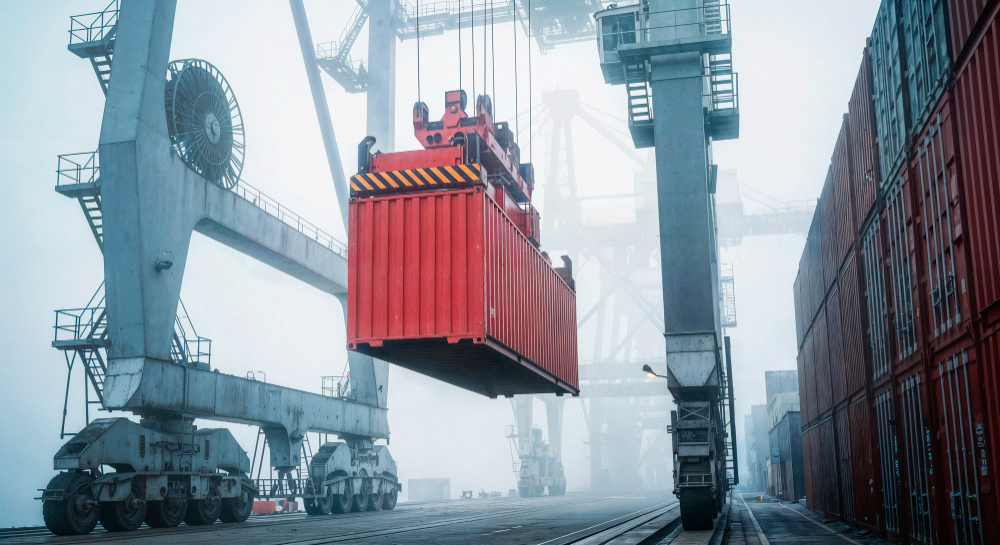
Amazon’s logistics partner network covers all key stages of the supply chain. This structure enables businesses of different sizes to access international markets much more easily. In fact, the presence of logistics partners is one of the most important pillars of Amazon’s goal of “continuous customer satisfaction.”
At the heart of this network are logistics companies specialized in different categories. These include international freight carriers, customs brokers, warehousing companies, road network operators, air cargo providers, and last-mile delivery companies. Even Amazon’s in-house operations are often run in full integration with these powerful partners. That’s why, for businesses, the real question is understanding at which stage which partner comes into play.
One frequently asked question in the global e-commerce world is: “Does Amazon manage all logistics processes itself, or does it outsource?” The most accurate answer is that Amazon uses a hybrid model. Amazon owns its own vehicles and fulfillment centers, but also relies heavily on the expertise of external logistics partners. This hybrid structure is critical for managing demand fluctuations and adapting to country-specific logistics requirements.
Amazon’s global logistics partners are most visible in international shipping processes. For businesses working with FBA or FBM models, correctly managing the supply chain not only reduces costs but also strengthens competitiveness. At this point, Amazon’s logistics partners provide exporters with both speed and security.
The main stages in the shipping process are: sourcing and consolidation, international transportation, customs clearance, inbound to the distribution center, and last-mile delivery. While Amazon tracks most of these stages through its own systems, the physical transport is usually handled by contracted logistics companies. This brings us to a frequent question: “Does Amazon fully automate the supply process?” In reality, automation is extremely powerful in terms of process control and route planning, but physical movement of goods is still executed together with logistics partners.
In air transport, Amazon Air plays an important role, but the entire global flight network is not operated by Amazon alone. Airline partners support international cargo flows and provide flexibility. This is especially valuable during peak seasons, when capacity issues can otherwise become a major problem.
For businesses that want to sell using the FBA model, the role of logistics partners becomes even more critical. Products must reach Amazon fulfillment centers safely, smoothly, and quickly. This is where Amazon’s freight forwarder and customs broker partners step in.
So at which stages of the FBA process do most problems occur? Typically, the most sensitive points are customs procedures and the inbound process to Amazon’s warehouses. For this reason, Amazon constantly updates its list of approved logistics partners and offers sellers reliable options. Because these partners understand Amazon’s standards, they run the process in a way that minimizes errors.
FBA-focused logistics partners also provide consulting on technical topics such as labeling, packaging, product compliance, and HS code identification. This is a major advantage, particularly for sellers doing FBA exports for the first time. Every product that does not meet Amazon’s inbound standards can result in delays and extra costs.
Last-mile delivery is one of the most important areas that defines Amazon’s competitive strength. At this stage, the Amazon Logistics network comes heavily into play, but globally, the contribution of external delivery partners remains critical.
This leads to another frequently asked question: “Does Amazon only use its own courier network for last-mile delivery?” No. Especially in certain countries, independent couriers, local logistics companies, and delivery partners are fully integrated into the system. This helps shorten delivery times and provides flexibility during peak demand periods.
Last-mile partners operate in line with Amazon’s quality standards for delivery security, route planning, package scanning, and delivery confirmation. The breadth and depth of this network are among the core drivers of Amazon’s customer satisfaction.
Amazon’s global logistics partners are responsible not only for transportation but also for customs and regulatory processes. Each country has its own import regulations, restricted product lists, documentation requirements, and tax rules. This complexity can be overwhelming, especially for small and medium-sized businesses.
At this point, Amazon’s authorized partners step in to guide exporters correctly and ensure smooth operations. For instance, the question “How can I know if a product can be shipped to the target country?” is one many sellers ask. The answer lies in assessing HS codes, product type, local regulations, and Amazon’s own policies together. Customs partners are the ones who can perform this assessment fastest and most accurately.
For this reason, Amazon’s logistics partner network provides not only physical transportation, but also a broad function that includes compliance and risk management.
Warehouse management is one of Amazon’s strongest capabilities, but it does not handle the entire process alone. In certain regions, third-party logistics (3PL) warehouses support Amazon’s network. These warehouses carry out processes such as consolidation, relabeling, repackaging, and inventory management.
So why does Amazon use external warehouses when it already has its own fulfillment centers? The answer is simple: flexibility and speed. In rapidly growing markets, Amazon’s own capacity can sometimes fill up very quickly, and external warehouses step in to relieve pressure on the system.
In addition, while Amazon provides sellers with supply chain planning tools, the practical implementation in the field is often managed in coordination with partner warehouses. For businesses, this structure ensures both cost control and operational accuracy.
Amazon’s global logistics partner network is a critical element that gives businesses a strong competitive advantage. The most important benefits of this network are speed, security, and operational stability. Thanks to the expertise of logistics partners, sellers can enter international markets without needing their own large-scale logistics infrastructure.
New sellers often ask, “Is it mandatory to work with Amazon’s logistics partners?” It’s less about obligation and more about security and reliability. A seller who builds its own logistics network can certainly manage their processes, but working with Amazon-approved partners significantly reduces delays and mistakes.
Shorter delivery times in global markets, optimized storage solutions, professional customs management, and integrated multi-modal transport all translate into a powerful competitive edge for sellers. In this way, businesses operating within the Amazon ecosystem gain the opportunity to grow on top of a strong logistics foundation.
Taken together, Amazon’s global logistics partners form not just a transportation network, but a strategic infrastructure at the heart of e-commerce. Businesses that choose the right partners can move forward in global markets with far more confidence, stability, and speed.
in MarcaBien?

Free lawyer check within 24 hours

Registration, litigation support and trademark monitoring

Simple online and online 3-step process

Global branding services and support

Registration, litigation support and trademark monitoring
Your brand is safe with us with 95% success rate
Process Work

In order for a trademark to be registered, it must meet the distinctiveness criterion. Results and advice within 24 hours.

After completing the order, we will draft an application. Once approved, we will file it on your behalf, providing legal representation.

The application is evaluated by the relevant Intellectual Property Office (IPO), published and approved for possible objections.

After a successful registration, your trademark is valid from the date of application and retains the right of priority throughout the process.
Contact Us

Secure and register your brand!