In order for a trademark to be registered, it must meet the distinctiveness criterion. Results and advice within 24 hours.

- en
- USD
- Login
Applying for a merchant ID at an international level is a critical step for any business that wants to accept payments globally. Entrepreneurs who sell digital products, subscription-based services, coaching programs, e-commerce products, or software solutions all need a reliable merchant account in order to receive payments from customers around the world.
Although modern global payment systems make it easier than ever to reach buyers in different countries, this process can quickly become complicated and risky if the underlying payment infrastructure is not set up correctly.
A merchant ID is a unique identifier assigned to your business by payment providers. It allows you to manage credit card transactions, subscription renewals, recurring payments, and all global payment flows in a structured and trackable way. That’s why people so often ask questions like: “Is it hard to get a merchant ID?”, “Which country should I choose?”, “Do I need to set up a foreign company?” or “Can I open an international merchant account from Turkey?”
In this guide, we’ll address all of these questions naturally and outline a comprehensive roadmap for anyone who wants to build a global payment infrastructure.
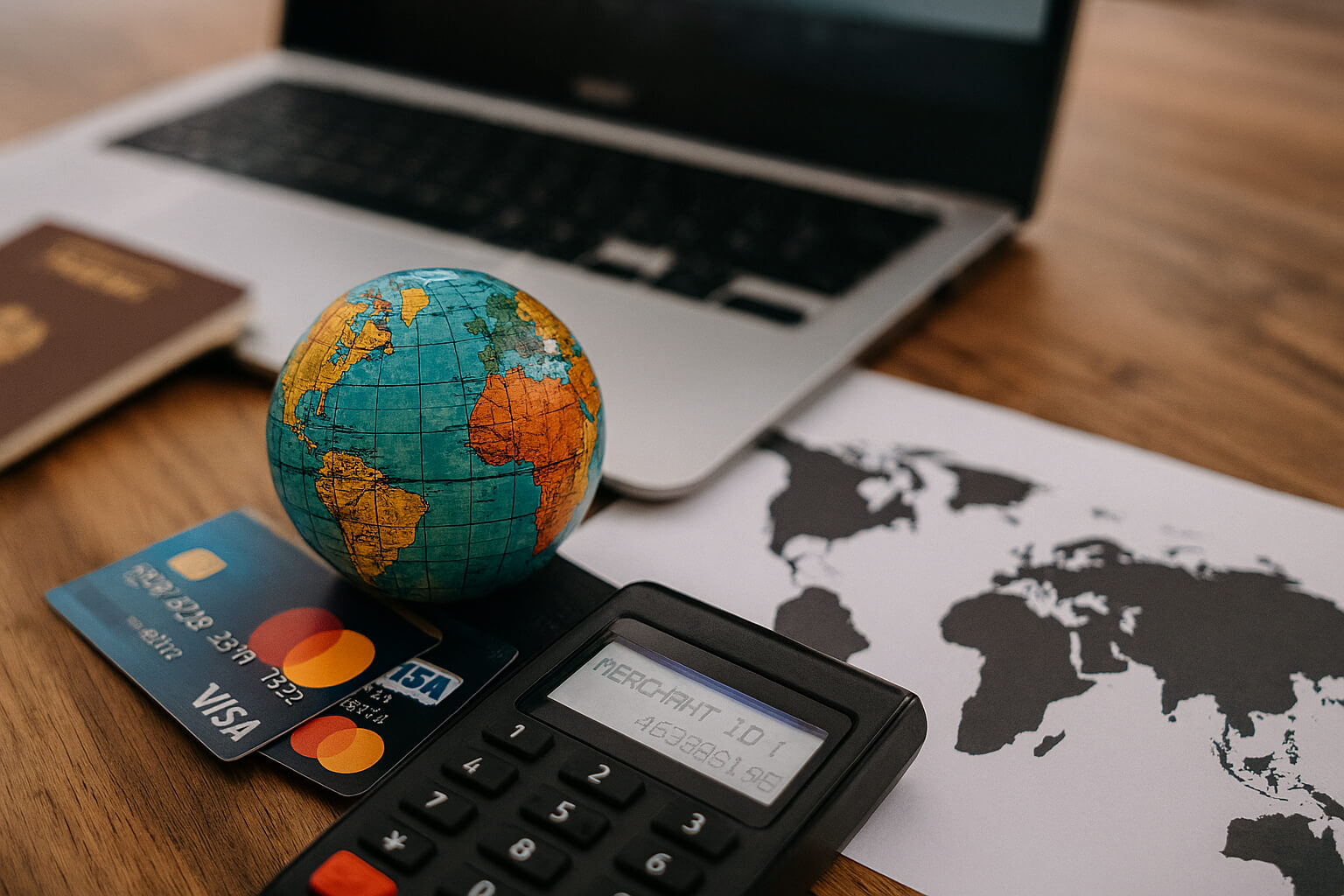
Before applying for a merchant ID internationally, it’s essential to understand exactly what this ID represents. A merchant ID is a business identifier used to securely process credit card and digital payment transactions. Without it, international payment providers will not authorize your business to handle card payments.
A common question is: “What’s the difference between a merchant ID and a regular payment account?” The distinction is quite clear: standard payment accounts are typically designed for individual or simple peer-to-peer transfers. A merchant ID, however, is required for businesses that want to accept commercial payments in a legal, compliant, and secure way.
Your merchant ID is how international payment providers recognize and track your business within their systems. Without a merchant ID:
You cannot accept credit card payments
You cannot process recurring subscription payments
You cannot manage chargebacks properly
Payment providers are less likely to trust and support your account
In the digital economy, a merchant ID effectively serves as your business’s “payment passport.” It’s mandatory for accessing global payment networks and processing transactions at scale.
This is one of the most frequently asked questions. Many global payment providers do require company information; however, it’s not a universal rule. Some platforms, such as Stripe in certain countries, allow individual entrepreneurs to open merchant accounts as sole traders. That said, if you’re aiming for high transaction volumes, establishing a legal entity generally increases trust and reduces the risk of account limitations.
To monitor and manage transactions worldwide, global payment providers assign each business a unique merchant ID. This ID appears within the transaction networks and allows banks, customers, and intermediaries to identify your business at every step of the process.
Understanding the basic workings of this system gives you a strong advantage during the application process. Users often ask: “When exactly is the merchant ID used?” The merchant ID plays an active role in situations such as:
When a customer pays with a credit or debit card
When a subscription renews automatically
When a transaction is refunded
When fraud checks and risk monitoring are performed
When payment and reconciliation reports are generated
The reason a merchant ID is so critical in international transactions comes down to two key needs: security and traceability. If you want to serve global customers, you must design this structure correctly from the beginning.
There are many global platforms you can use to apply for a merchant ID, but it’s important to choose the one that best fits your business model. One of the most common questions is: “Where is the easiest place to get a merchant ID?” There is no single correct answer, because the ideal platform depends on your use case, risk profile, and target market.
Some of the most widely used global merchant service providers include:
Stripe
PayPal Business
Payoneer Commerce
Adyen
Wise Business
Checkout.com
2Checkout (Verifone)
Square (in certain countries)
Each of these platforms has different strengths. Stripe, for example, is excellent for software projects and digital products; PayPal benefits from very strong global brand trust; Adyen is often preferred by large enterprises and high-volume merchants.
This is another question that comes up frequently. Stripe does not officially operate in Turkey, but some entrepreneurs form companies abroad and then obtain a Stripe merchant account through that foreign entity. PayPal’s individual services are limited in Turkey, but it can still be used via companies registered in other countries.
The crucial point is to follow a path that is fully legal, transparent, and sustainable.
The documents required to obtain a merchant ID vary by platform, but in general, you will be asked to provide:
Personal identification details
Tax ID or company registration details
Bank account information
Contact information
A description of your products or services
Your website URL
Terms of service and privacy policy
Many people ask: “Is having a website mandatory?” For most international payment providers, the answer is effectively yes. Your website shows what you sell, how you operate, and what kind of user experience you provide. It also helps the provider assess your risk level.
Some platforms may accept this in limited scenarios, but in high-security global payment networks, having a proper website is generally considered essential. Applications that rely solely on social media pages are often seen as higher risk and are more likely to be rejected.
Although applying for a merchant ID internationally can seem intimidating at first, the process is actually quite systematic when broken down into steps. A common question is: “How long does approval take?” The answer depends on the platform: Stripe may approve accounts almost instantly, PayPal might take a few days, while providers like Adyen may require several weeks for full risk and compliance checks.
The general application flow looks like this:
Creating an account on the chosen platform
Verifying your personal or business identity
Configuring your payment methods
Linking your bank account
Reviewing your products or services
Performing a risk assessment
Activating your merchant ID
Risk assessment is especially important. If a platform considers your business model to be high-risk, it may place your application under review or reject it entirely.
Technical steps are only one part of the process; strategic positioning matters just as much. If you want to accept global payments with minimal friction, you should present a clear, low-risk business profile right from the start.
Another common question is: “If my application is rejected, can I apply again?”
Yes. In most cases, you can reapply after addressing the reasons for rejection and improving the weak points in your setup.
A professional, complete, and transparent website
Clear descriptions of your services and pricing
A platform that includes visible terms of service and refund policy
Operating in a low-risk industry or category
Consistent brand presence and up-to-date content
A clean online reputation with no signs of abuse or fraud
Payment providers are much more likely to approve applications from businesses that appear trustworthy and well-organized.
Getting your merchant ID is not the finish line—it's the start of real global payment management. From the user’s perspective, payment flow is a major part of the overall experience. Your merchant ID is used automatically within the payment infrastructure, but your business still needs to track and optimize these flows.
At this stage, people often ask: “Is a merchant ID alone enough?”
No. The payment infrastructure is a complete ecosystem. The merchant ID is a key component, but you also need:
Robust payment gateways
Fraud detection and prevention tools
Subscription management systems
Automated invoicing and billing
Proper tax calculation by country or region
All of these elements must be configured correctly if you want to build a stable and scalable international payment setup.
Businesses that sell internationally can’t simply “set up payments once and forget it.” Sustainability and ongoing risk management are essential. That’s why merchant ID management should include continuous monitoring, optimization, and reporting. Payment platforms may periodically review your account, and as your transaction volume grows, they may request additional documentation or verification.
One of the most critical concerns is: “If my account is shut down, will I lose the ability to collect payments from my customers?”
If your primary payment provider closes your account, your payment flow through that provider will stop. For that reason, it’s often wise to diversify and build multiple payment rails instead of relying on a single platform.
Key elements of a sustainable global payment operation include:
Maintaining a low chargeback rate
Regular financial reporting and reconciliation
Ensuring tax compliance in each market you serve
Clear, honest communication with customers
Keeping your website and process documentation up to date
The long-term stability of your merchant ID is closely tied to your overall business reputation and risk profile.
Applying for a merchant ID internationally is the first major step toward accepting payments globally. With the right strategy and well-designed infrastructure, the process is usually much easier than it appears at first glance. Businesses that meet both the technical and strategic requirements can quickly begin serving customers worldwide and create a sustainable revenue model. In today’s digital economy, this step is one of the foundational building blocks on the journey to becoming a truly global brand.
The Brand Protection You Need is Always With You
The Marcabien brand is just one of the advantages that stand out, offering one-stop shopping as well as worldwide coverage. Wherever you come from, our team of experienced trademark lawyers is ready to offer a seamless experience and effective end-to-end trademark protection while proudly representing you worldwide.





Process Work

In order for a trademark to be registered, it must meet the distinctiveness criterion. Results and advice within 24 hours.

After completing the order, we will draft an application. Once approved, we will file it on your behalf, providing legal representation.

The application is evaluated by the relevant Intellectual Property Office (IPO), published and approved for possible objections.

After a successful registration, your trademark is valid from the date of application and retains the right of priority throughout the process.
Contact Us

Secure and register your brand!