Free lawyer check within 24 hours
For global entrepreneurs, the European Union (EU) is not just a large market; it is also an attractive region for setting up a company thanks to advantages such as a stable economy, strong regulations and modern infrastructure. Especially businesses in e-commerce, technology, consulting and remote services often choose to establish a company in EU countries to both increase brand credibility and gain easier access to the European market. However, the concept of the “best country” is not the same for everyone; the ideal choice depends on the needs of the business, its budget and its target market.
The first question on many entrepreneurs’ minds is usually this: “Which EU country offers the most reasonable starting point for a newly established company?”
The answer to this question cannot be limited to a single country, because the factors that shape the entrepreneurial environment within the EU are diverse: tax regulations, company formation costs, access to bank accounts, digital infrastructure, administrative convenience and the support provided to foreign entrepreneurs, for example.
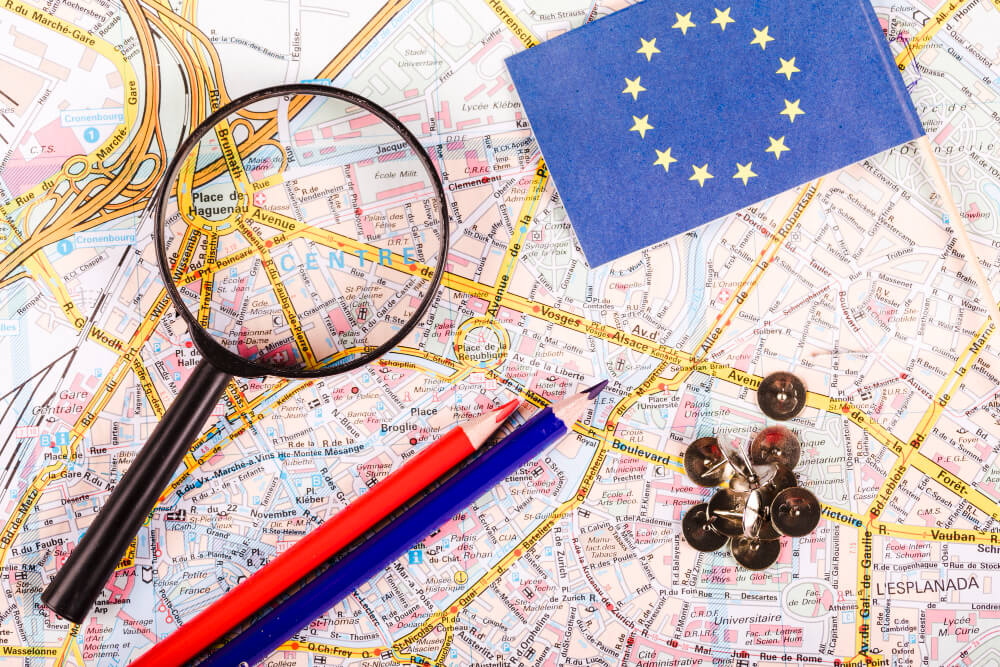
EU countries provide businesses not only with a legal address, but also with a strong brand perception, access to investment opportunities, a large customer base with high purchasing power and a protected trade infrastructure. A company established within the European Union can do business with 27 countries under the single market principle, enjoying free movement.
For newly established companies, the answer to the following question is a critical starting point: “What concrete advantages does setting up a company in the EU give me?”
To summarize these advantages:
Fast entry into the European market
Increased trust among international customers
Strong banking infrastructure
Easy integration with payment systems such as Stripe, PayPal and Revolut
Incentives aimed at foreign entrepreneurs
Advantageous structures in low-tax regions
Suitable environments for digital entrepreneurship
Even though not every country offers the same level of advantages, it is undeniable that the entrepreneurial environment across the EU is strong. What matters here is choosing the country that aligns with the goals of the business.
What makes an EU country “ideal for newly established companies”? Without answering this question correctly, it is difficult to make a sound country choice. Some countries offer tax advantages, others make digital bureaucracy easier; some stand out more in terms of prestige.
The main criteria to consider are:
Ease and speed of the company formation process
Formation costs
Annual maintenance and accounting expenses
Tax structure (corporate tax, VAT, dividend tax)
Ease of opening a bank account
Policy towards foreign entrepreneurs
Digital infrastructure and online processes
Recognition within Europe and international prestige
Possibility of remote management
Within these criteria, the countries that stand out offer the most advantageous options for newly established businesses.
The countries below are known among entrepreneurs as the most preferred options with easy processes, strong banking infrastructure and manageable costs. Since each focuses on a different advantage, it is important to consider the specific needs of the business when choosing.
Estonia offers unique conveniences for newly established businesses thanks to having one of the most advanced digital government systems in the world. In particular, the e-Residency program allows entrepreneurs from all over the world to establish a Europe-based company.
Key advantages of Estonia:
Fully online company formation
Remote management as an e-resident
Europe’s most innovative digital infrastructure
Zero tax on reinvested profits (undistributed profit is tax-free)
Low administrative burden
Startup-friendly policies
The main question many entrepreneurs are curious about is: “Do I need to go there in person to set up a company in Estonia?”
No. In this respect, Estonia has one of the most accessible entrepreneurial ecosystems in Europe.
However, one small detail is important: opening a bank account may require physical presence in some cases; this process has become easier with digital banks.
Estonia is particularly suitable for newly established companies engaged in software, consulting, SaaS, digital products and e-commerce.
Ireland has one of the lowest corporate tax rates in the EU (12.5%). For this reason, giants such as Google, Meta and Apple have established their European headquarters there. It also offers strong infrastructure and prestige for newly established companies.
Notable features of Ireland:
One of the lowest corporate tax rates in the EU
Very strong image in terms of international prestige
An excellent ecosystem for technology companies
Benefits of being close to multinational corporations
English-speaking country
Easy company formation process
The only downside is that it is not as digital and cheap as Estonia. However, in terms of prestige, an Irish company generally leaves a very strong impression.
Most people wonder: “Is an Irish company good for startups?”
Yes, it is one of the strongest options especially for globally oriented technology firms.
The Netherlands is one of the most established trading countries in the EU. Thanks to its strong logistics, modern corporate laws and international business culture, it offers significant advantages for newly established companies.
Advantages of the Netherlands:
Strategic location at the heart of Europe
Very strong legal infrastructure
Accessible company structures for foreign entrepreneurs
Strong banking system
Ideal environment for international trade
The Netherlands stands out particularly for large-scale or fast-growing companies. However, costs are higher compared to countries such as Estonia and Cyprus.
The following question is frequently asked: “Is the Netherlands too expensive for a newly starting business?”
For early-stage businesses, the cost can be high; however, for brand-focused companies it is a strong choice.
Southern Cyprus offers one of the lowest corporate tax rates (12.5%) among EU member states. In addition, company formation processes are fast and the banking infrastructure is suitable for foreigners.
Highlighted features:
Low corporate tax
VAT advantages
English-speaking business environment
Cost-effective company formation
A structure compatible with digital business models
Cyprus is a practical solution especially for e-commerce and digital ventures.
Malta is an EU country preferred especially by companies in gaming, financial technologies, software and digital services. Although its tax system may seem complex, it is possible to reduce effective tax rates significantly with the right structuring.
Advantages of Malta:
A system open to foreign investors
English-speaking business culture
Strong ecosystem for fintech and digital ventures
Low effective tax through a tax refund mechanism
It is popular among newly established companies, but accounting processes are more detailed.
Germany is one of the EU countries where company formation is most highly valued in terms of prestige. Strong industry, high purchasing power and a disciplined business culture make Germany an attractive hub.
Advantages:
Europe’s strongest economy
High customer trust
Advanced legal and commercial infrastructure
Great opportunities for B2B ventures
The downside is that processes are more detailed and costly. It is sensible not so much for newly established digital businesses, but for ventures aiming for a more corporate structure.
A brief summary perspective below can make the decision easier:
Fastest and most digital formation: Estonia
Most prestigious and tech-friendly environment: Ireland
Best location for international trade and logistics: Netherlands
Lowest tax and budget-friendly option: Southern Cyprus
For fintech and gaming-focused ventures: Malta
For those aiming at corporate growth: Germany
This overview provides clear guidance depending on the goals of the business.
No, it is not mandatory. However, if you have goals such as:
Working with EU customers
Accessing European payment systems
Entering Amazon / Etsy / Shopify EU marketplaces
Benefiting from tax advantages
Increasing corporate credibility
then setting up an EU company provides great advantages. For this reason, many new companies prefer EU-based structures to bring their products or services to Europe.
For newly established businesses, company structure is not just a legal detail; it is one of the backbones of the entire business model. When choosing between EU countries, variables such as:
Formation speed
Tax structure
Target market of the company
Sectoral compatibility
Accessibility of bank accounts
Branding goals
should be taken into account.
For many early-stage businesses, Estonia and Ireland stand out, while brands aiming for growth may choose the Netherlands and Germany. Malta can be ideal in fintech and digital fields, and Southern Cyprus for those seeking a low-tax and cost-effective option.
Whichever country you choose, what matters is that the company structure you establish aligns with your business and provides a sustainable foundation for cross-border trade.
in MarcaBien?

Free lawyer check within 24 hours

Registration, litigation support and trademark monitoring

Simple online and online 3-step process

Global branding services and support

Registration, litigation support and trademark monitoring
Your brand is safe with us with 95% success rate
Process Work

In order for a trademark to be registered, it must meet the distinctiveness criterion. Results and advice within 24 hours.

After completing the order, we will draft an application. Once approved, we will file it on your behalf, providing legal representation.

The application is evaluated by the relevant Intellectual Property Office (IPO), published and approved for possible objections.

After a successful registration, your trademark is valid from the date of application and retains the right of priority throughout the process.
Contact Us

Secure and register your brand!