Free lawyer check within 24 hours


Many entrepreneurs who want to step into international trade face a critical dilemma before they even begin: “Should I set up an export company or an import company?”
At first glance, these two models may seem like two sides of the same coin; but when you dig deeper, you see that each has a completely different logic, business structure, risk profile, financial requirement and operational process. Therefore, choosing the right door through which you enter trade directly affects both your start-up costs and your long-term success.
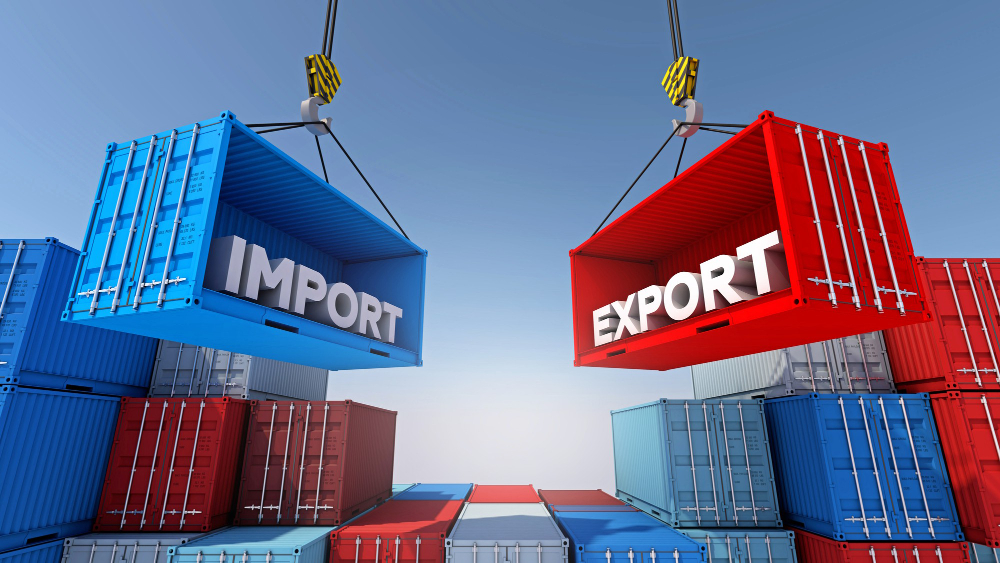
Export and import are often perceived as two ends of the same trade chain, but in practice these two models lead a business down completely different paths. Export means selling a product you produce or procure to another country. For this reason, the logic of export is built on generating revenue, expanding markets and earning foreign currency.
Import, on the other hand, means buying goods from another country, bringing them into your own country and selling them there. Thus, the starting point of import is based on managing costs, finding quality suppliers and creating competitiveness in the domestic market.
The most fundamental difference between these two concepts is actually hidden in this sentence: Export is a sales activity; import is a purchasing activity.
That’s why the first question of export companies is “Where can I sell?” while the first question of import companies is “Where can I buy at the right price?”
This orientation alone changes the strategy of the two business models from beginning to end.
For someone considering setting up an export company, the first step is to research in which countries the product or service is in demand, and to understand the cultural, economic and legal structure of the target market. The success of export is based on correct market selection and the process of building a customer base. Many exporters find their customer and receive an order before even producing; only then do they start procuring or manufacturing the product. This is one of the main reasons why export can start with relatively lower financing.
In an import company, the journey is the exact opposite. Here the priority is to find the right supplier, obtain samples, negotiate prices and check whether the product complies with local regulations. Sales in the domestic market do not begin before the product is purchased; therefore, the first step in import requires serious research, quality control and cost calculation.
The focus of an entrepreneur who sets up an import company is not the market but the supply, because the success of the business depends on the quality and cost of the product purchased.
The sharpest distinction between export and import appears in the financial structure. Export is mostly a system where production or procurement is done as orders come in, so it does not require large capital at the beginning. In some sectors, there are even export companies that operate completely without holding stock; the product is prepared after the order, and payments are often received partially in advance or on terms. Therefore, export is a financially safer and lower-risk entry route.
Import, however, is a business that requires large capital because products are purchased in bulk and brought into the country. The cost of these products is usually paid in advance; on top of this, customs duties, VAT, freight costs and storage expenses are added. Until the product is sold, all the risk rests on the importer’s shoulders. A poor product choice or quality problem can cause serious losses for the importer. For this reason, in terms of capital and risk, import carries a much heavier financial burden than export.
The most important risk that export companies face is not being able to find customers in the target market or having an existing customer cancel an order. Cultural differences, payment habits and logistics processes are inherently part of international sales. However, there is one striking fact: as long as the exporter does not hold stock, their risk is limited, because there is no unsold inventory sitting on hand.
In import companies, the risk is more tangible and more costly. Poor-quality products, goods being held at customs, additional document requirements, unexpected taxes or weaker-than-expected domestic sales can all directly cause financial loss for the importer. The longer the product stays in the warehouse, the higher the cost becomes, and this cost can have much more serious consequences than in export.
In other words, the nature of the risk is completely different: Export risk is based on sales; import risk is based on the product.
There are clear differences between export and import customs procedures. In export, governments generally take an encouraging approach; the process is smoother and customs controls are lighter. Most of the time, a certificate of origin, invoice, packing list and export declaration are sufficient.
Import is completely different because when goods enter a country, the state aims to protect both consumer safety and economic balance. For this reason, depending on the type of product, CE certificates, test reports, health certificates, MSDS forms, quota permits, customs duties and special consumption taxes come into play. A missing document at customs can delay the entire shipment, and this delay can lead to serious costs.
Therefore, import has a more regulated, more exhausting and more bureaucratic customs process.
When you set up an export company, most of your daily operations revolve around marketing, customer communication and order management. In other words, for an exporter the main issue is not so much producing the product, but selling it. That is why export companies mostly focus on roles such as foreign trade specialists, sales representatives and market analysts.
For import companies, the heart of operations is the supply chain and logistics. Finding the right product at the right price, testing samples, tracking orders, choosing transportation options, clearing goods through customs and managing domestic stock make up the entire import process. Thus, on the import side, operations are much more physical and cost-driven.
In export, the added value and innovation of the product are often more important than pure price competition. For example, the global recognition of textiles, furniture, food and machinery produced in Turkey is largely due to their quality and competitive pricing. This makes profit margins in export generally higher than in import.
In import, profit margins often start low because price competition in the domestic market is intense. Products imported from countries like China, in particular, are under heavy competitive pressure. For importers to increase their profits, they need to build a brand, differentiate their products or diversify their sales channels. In other words, import profits grow with volume, while export profits grow with value.
Export companies generally choose structures that appeal to the global market. Models such as a U.S. LLC, UK LTD or Estonian OÜ are very suitable for export because issuing international invoices, receiving payments and working with foreign customers proceed smoothly under these structures.
Import companies, on the other hand, mostly sell in the domestic market, so they must have a company in the country where they operate. For example, if you are importing into Turkey, you need to establish a LTD or joint-stock company (A.Ş.) in Turkey, because customs procedures require a local tax number.
For this reason, import requires a more local company structure, while export can be run under a more global one.
There is no single answer to this question, but it is possible to predict the right choice based on the business model. If you have a strong product, production capability or supply connection, and you want to earn high profits with relatively low capital, export is a more logical starting point.
If you have strong connections in the domestic market, solid capacity to hold stock, you work with fast-moving products and can find the right suppliers, import may be more profitable for you. Both models can be extremely lucrative with the right strategy; what matters is determining which path suits your capital structure, business idea and trading style better.
in MarcaBien?

Free lawyer check within 24 hours

Registration, litigation support and trademark monitoring

Simple online and online 3-step process

Global branding services and support

Registration, litigation support and trademark monitoring
Your brand is safe with us with 95% success rate
Process Work

In order for a trademark to be registered, it must meet the distinctiveness criterion. Results and advice within 24 hours.

After completing the order, we will draft an application. Once approved, we will file it on your behalf, providing legal representation.

The application is evaluated by the relevant Intellectual Property Office (IPO), published and approved for possible objections.

After a successful registration, your trademark is valid from the date of application and retains the right of priority throughout the process.
Contact Us

Secure and register your brand!