Free lawyer check within 24 hours


Starting a new company and taking your first steps into exporting often brings one major challenge: understanding how the export declaration process actually works. Especially for businesses exporting for the first time, it can be difficult to make a solid start when all the information is buried in complex, legalistic language. Yet the export declaration is the backbone of export operations, and a properly prepared declaration both speeds up the process and minimizes risk. This guide aims to clear the main question marks for newly established companies, explain the process step by step in an understandable way, and offer a practical roadmap you can follow in real life.
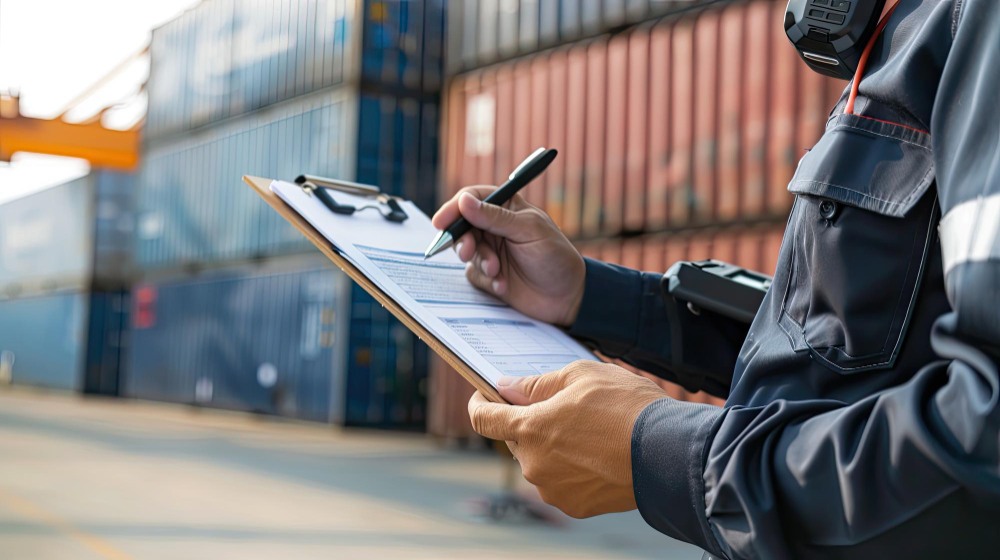
An export declaration is an official document prepared to notify the customs authority about the goods to be exported. For newly established companies, the importance of this document does not come only from it being a legal requirement, but also from the fact that it keeps the export process controlled and smooth. One of the most frequently asked questions at this stage is: “Is it possible to ship products without an export declaration?” The short answer is: no. All commercial exports must be declared in compliance with customs legislation.
A common mistake new companies make at the beginning is to see the process as a simple paperwork task. In reality, the export declaration affects many factors, from product classification and mode of transport to the accuracy of documentation and the calculation of financial obligations. Incorrect declarations can lead to delays, financial penalties, and unhappy customers. That’s why acting systematically and consciously right from the very first export gives you a critical advantage.
A newly established business needs to complete certain fundamental steps before it can start exporting. In this section, we will answer key questions that especially first-time exporters often ask, such as “Which documents do I have to prepare?” and “What should my very first step be?”
Every exporting company must first have a commercial registry entry, a tax registration, and a scope of activity that allows for export. A frequent mistake new companies make is failing to include export-related lines in their activity certificate or articles of association. For this reason, it is very helpful to make sure during the incorporation phase that your business activity explicitly covers foreign trade.
One of the most common questions is: “As a new company, can I file my own export declaration?” Technically, yes. However, in practice, it is a risky and time-consuming process for inexperienced companies. Customs brokers are well-versed in customs regulations, so they both speed up the process and help prevent errors. For newcomers, working with a customs broker is in most cases the healthiest and safest way forward.
Yes, they do. In e-export, a simplified Electronic Commerce Customs Declaration (ETGB, in some jurisdictions) is used for small-value or micro exports, whereas standard export declarations are used in classical export procedures. New companies often ask: “Which type of declaration is right for me?” The answer depends on the weight and value of the shipment. For larger-scale, clearly commercial consignments, a standard export declaration is mandatory.
The most important thing new companies need to understand is that an export declaration is not just a form to be filled out. It is a system in which all legal, commercial and logistics-related information about the product is integrated. So how does the process work step by step?
Certain key documents are required in order to prepare an export declaration. Rather than listing dozens of items, let’s clarify the most critical ones:
Invoice: This is the heart of the export. Information such as the product, quantity, unit price and total amount is included on this document.
Packing list: This shows logistics details such as how many packages there are, what each package contains, and the weight and dimensions of the shipment.
Certificates of origin / movement certificates such as A.TR, EUR.1: These may be required depending on the destination country and applicable trade agreements.
Bill of lading or transport document: Depending on the mode of transport, you may need a CMR (road), AWB (air), or Bill of Lading (sea).
The part new companies struggle with most is realizing that all of these documents must be consistent with each other. If the information on the invoice does not match the packing list, or the packing list does not match the transport document, the customs officer may reject the declaration.
In many countries, export declarations are submitted electronically. In practice, customs brokers usually carry out this process on behalf of the company. At this stage, the product’s customs tariff code (HS / tariff code, such as GTIP in Turkey) is entered into the system. One of the most confusing questions is: “How do I determine my HS code?” Choosing the wrong code can create serious risks in terms of both taxes and compliance. That’s why getting expert support on product classification significantly reduces the margin of error.
Once the declaration has been entered into the system, it is automatically assigned to a type of inspection or “lane” by customs. New companies often wonder what these lanes are. Commonly, they are:
Green lane: No document check is carried out; the export can proceed directly.
Yellow lane: Documents are checked.
Red lane: Both document and physical inspection are carried out.
Blue lane: Reserved for authorized or trusted traders.
Since your company is newly established, it is completely normal to encounter the red or yellow lane in your first exports. This does not mean that your company is considered unreliable; it simply means that the system is building up a record of your compliance history.
Once the export declaration has been approved, the goods are sent to the customs office. A physical inspection may be carried out at this point. After the customs seal is attached to the vehicle or container, the exit process is completed. A question new exporters often ask is: “Which documents must the driver carry during transport?” Depending on the mode of transport, the driver may need to carry the invoice, the transport document, and in some cases a printout of the export declaration.
Some aspects of the export declaration process may seem more complicated than others for companies just starting out. In this section, we will explain the most common issues and their solutions in a clear and practical way.
Issues with Determining the HS Code: One of the most frequent mistakes new companies make is assuming that their product falls into the same category as a similar product and then selecting the wrong HS code. This often leads to the question: “Does this product really belong in this category?” Misclassification can trigger additional inspections or tax issues in some countries. Working with an experienced customs broker or reviewing official tariff explanations makes this process much easier.
Errors in Invoice Content and Commercial Information: New companies sometimes prepare export invoices using the same habits they have from domestic sales. However, export invoices give much more weight to elements such as terms of delivery, payment method, currency and value. Taking international trade rules into account when preparing export invoices helps speed up the process and reduces the risk of discrepancies.
Choosing Incorrect Incoterms: Incoterms rules are one of the most challenging topics for new exporters. Questions like “Should I use FOB or CIF?” come up frequently. When choosing the delivery terms, you need to consider cost, risk sharing and responsibilities. For example, a company that does not want to take on too much risk may prefer FOB instead of EXW, or vice versa, depending on the specific scenario.
First-time exporters often ask: “Up to which point can we stop and revise the process if something is wrong?” Once the declaration has been formally approved, making changes becomes quite difficult and restricted. That’s why checking all documents before approval is critically important. Paying attention at this stage saves both time and money, and prevents you from having to redo the same steps.
Customs brokers do much more than simply enter data into the customs system. They manage the entire process from end to end. For new companies, especially in the first year, trying to proceed without a broker is rarely recommended. Brokers follow regulatory changes closely, detect document errors in advance, and make the process more efficient. The important thing here is to work with the right brokerage firm and establish clear communication from the very beginning.
Many new businesses worry about costs and therefore frequently ask this question. In reality, the fee paid to a customs broker is usually much lower than the potential cost of a wrongly filed declaration. In the long term, working with a broker can actually offer a cost advantage, because it minimizes mistakes, reduces delays, and improves your relationship with customs.
Logistics is an inseparable part of the declaration process. The weight and dimensions of the product, how it is packed, and which mode of transport is used all have a direct impact on the declaration. For example, if the packing list is not prepared correctly, the information used by the logistics company and customs may not match, which can lengthen the control phase of the declaration. That’s why it is essential to ensure logistics data is always clear, up to date and internally consistent.
Air freight is usually fast but more expensive. Sea freight is more economical but takes longer. Road transport is often the most practical option, especially for early exports to nearby regions such as Europe. For many new companies, choosing road transport for the first exports makes it easier to manage documents and reduces operational complexity.
Once the export declaration is approved, the process moves into the physical shipment stage. After inspection at customs, the goods leave the country and the export declaration is recorded as closed in the system. At this point, new exporters often ask: “When will my declaration be officially closed?” Usually, once the goods have physically left the country, the system closes the declaration shortly thereafter. However, in some cases, delays in transport documents or discrepancies in data can extend the closing period.
There are a few simple but powerful ways for new exporters to manage the process more easily and with less stress:
Create your documents using a standardized filing and naming system so that they are easy to track and update. Use the same control checklist for every export operation, so you don’t skip any critical step. Always make sure the invoice, packing list and transport document are fully consistent with each other. Never choose your HS code randomly; get professional support and document the reasoning behind your classification. In your first year of exporting, always work with a customs broker instead of trying to manage everything alone.
Newly established companies that truly understand the export declaration process gain a significant advantage not only in their very first shipments, but in all subsequent export operations. Every stage of the process can be learned, and as experience builds up, things move much faster and more smoothly. The more informed and conscious your approach is at the start of your export journey, the easier it becomes to manage later operations. It is completely normal for this process to seem intimidating at first, especially for brand-new businesses. However, with the right information, disciplined document management and professional support, the export declaration quickly becomes a routine part of your business. In this way, companies take an important step not only in terms of operational capability, but also in terms of strengthening their competitiveness in international markets.
in MarcaBien?

Free lawyer check within 24 hours

Registration, litigation support and trademark monitoring

Simple online and online 3-step process

Global branding services and support

Registration, litigation support and trademark monitoring
Your brand is safe with us with 95% success rate
Process Work

In order for a trademark to be registered, it must meet the distinctiveness criterion. Results and advice within 24 hours.

After completing the order, we will draft an application. Once approved, we will file it on your behalf, providing legal representation.

The application is evaluated by the relevant Intellectual Property Office (IPO), published and approved for possible objections.

After a successful registration, your trademark is valid from the date of application and retains the right of priority throughout the process.
Contact Us

Secure and register your brand!