Free lawyer check within 24 hours

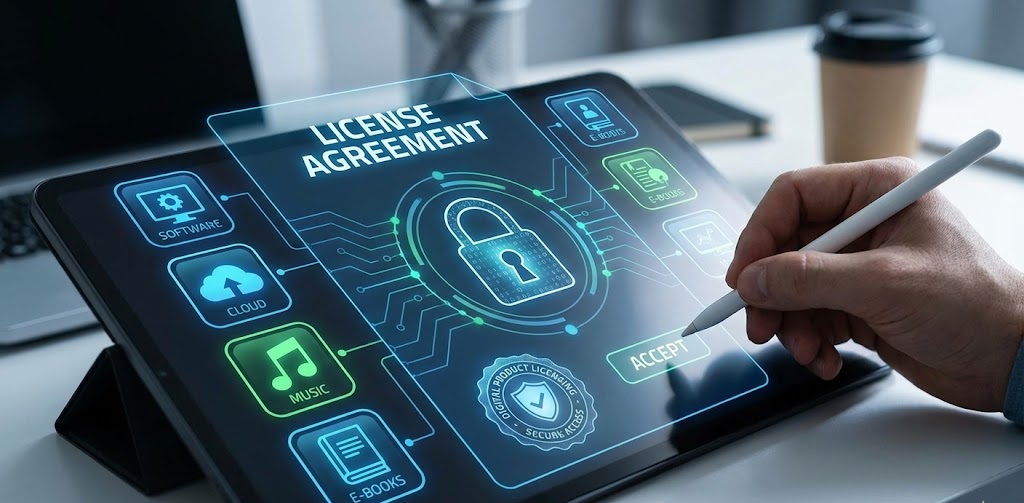
The number of digital products offered for sale on a global scale is increasing every day, and this growth makes licensing more critical than ever for businesses, developers, designers, producers and content owners. Software, e-books, digital artworks, training materials, photos, SaaS products, in-game items, music files and much more reach millions of users worldwide. However, the cross-border nature of digital products means that licensing is no longer just about local law; it is also closely tied to international intellectual property standards, different national regulations and platform policies. For a digital product to be sold, used and distributed globally, it is essential to define and apply the licensing rules correctly.
Digital product licensing differs from traditional product licensing in several important ways. For physical products, ownership is usually transferred in a tangible way, whereas with digital products what is typically transferred is a “right to use.” In other words, the user does not own the product itself; they obtain the right to use it under the conditions set out in a particular agreement. For this reason, license types, usage limits, duration, territorial rights, distribution model and usage restrictions must be clearly defined. These rules become even more critical in international sales, because every country has its own intellectual property laws, privacy regulations and consumer protection rules.
In this article, we will examine in detail the core concepts of digital product licensing on a global scale, the international rules involved, usage rights models, legal obligations, platform policies and the key steps digital product owners need to pay attention to throughout the process.
In digital products, the concept of “sale” is most often a transfer of license. In other words, the user does not acquire the product itself; they acquire specific usage rights. This distinction forms the foundation of global licensing. Because digital products can be copied, reproduced and distributed infinitely, there must be extra sensitivity around protection and the transfer of rights.
One of the most frequently asked questions is: “What exactly does a user get when they buy a digital product?” The answer is: not the product itself, but the permissions defined by the license. These permissions may include different dimensions such as commercial use, personal use, time-limited use, resale rights, reproduction rights and distribution rights. These differences form one of the most critical parts of any license agreement.
The sale of digital products is also closely linked to global intellectual property law. WIPO (World Intellectual Property Organization) standards, national copyright laws, regulations such as the DMCA for digital content protection and the EU’s digital market rules all directly affect licensing processes. For this reason, the legal framework must be prepared with as much care as the technical specifications of the product.
Understanding certain core concepts makes the entire global licensing process easier. Digital product owners often encounter questions such as: “What is the difference between copyright and a license?”, “How much right is transferred to the user?” and “Can a license be transferred?”
Copyright indicates that the product belongs to the creator and that the rights holder has the authority to control the work. A license is the mechanism by which the rights holder grants part of these rights to the user. So, while the copyright of a digital product remains with you, you may grant usage rights to others through licensing.
Other key concepts in global licensing include:
Right of use: Defines for what purposes and how the user may use the product.
Territorial rights: Specifies in which countries the license is valid.
Duration: States how long the license remains in effect.
Commercial use permission: Determines whether the product can be used for commercial purposes.
Redistribution rights: Regulates whether the user can transfer the product to third parties.
Understanding these concepts correctly is crucial for drafting license agreements that are clear and internationally compliant.
The type of license chosen for digital products distributed globally directly affects how the product can be used and how strongly it is legally protected. Selecting the right license for each product shapes the long-term revenue model, user behavior and legal security.
This type of license allows digital products to be used only by an individual end user. The product cannot be redistributed, resold, shared or used in commercial projects. This model is commonly used for digital artworks, templates, e-books and training materials.
A common question is: “Does this license offer any flexibility for small-scale commercial projects?” No. A personal use license does not permit any kind of commercial use.
A commercial use license permits a product to be used within a business or professional context. It is widely used for products such as design packs, video templates and software libraries.
This license type often includes sub-categories such as:
Use in a single commercial project
Use in unlimited commercial projects
Enterprise or corporate usage rights
Each model narrows or broadens the scope of usage.
Extended licenses grant the user more extensive rights. For example, an agency that wants to resell a design file to its own clients will usually need an extended license. Permissions such as resale, redistribution and commercial reproduction are typically available only under extended license terms.
Many users ask: “If I buy an extended license, do I completely own the product?” No. The rights holder’s copyright remains intact; you only receive additional usage rights.
License types used for software are more complex than for other digital products. For example, SaaS products are licensed through subscription models, while API systems are licensed based on usage capacity.
In software licensing, parameters such as the following are key:
Source code access
Right to copy
Enterprise usage
Server deployment rights
Per-user or per-seat pricing
Each country has different laws for digital content, copyright and data protection. Therefore, a single license text is rarely sufficient for global licensing; regional compliance must be taken into account.
The U.S. uses the DMCA for digital copyright protection. It is one of the strictest systems for preventing unauthorized use of digital content. Compliance with the DMCA is mandatory when selling digital products in the United States.
The EU’s GDPR and Digital Services regulations require that user data be protected and that license information be clearly communicated. When licensing for this region, data processing permissions also need to be included in the agreement.
In these countries, digital content regulations tend to be stricter. In China, for example, digital distribution platforms may require government approval. License texts often need to be adapted to the local language and legal framework.
Digital products are usually sold through specific platforms, and each platform has its own licensing rules. For example:
Amazon Kindle e-book licensing
Envato’s digital product licensing model
Steam’s game licensing policies
Apple App Store and Google Play software agreements
Adobe Stock and Shutterstock media licenses
For a global product seller, an important question is: “Do I have to write a different license for the same product on different platforms?” Yes. You must comply with each platform’s standards; however, you can keep your core licensing logic consistent across platforms.
One of the most common problems in global licensing is that license texts are vague or ambiguous. An unclear license creates legal risk for both the seller and the user.
Some of the most frequent mistakes are:
Not clearly specifying commercial use permissions
Failing to define territorial restrictions precisely
Including third-party copyrighted content in the license as if it were fully owned
Leaving source code access terms unclear
Not adding rules for processing user data
Using provisions that might be invalid in certain countries
These errors can lead to serious consequences, including account suspension or product removal, especially when selling on large platforms.
For professionals selling globally, having a solid license agreement is critical. Such an agreement should typically include the following sections:
Product description
Explanation of usage rights
Territorial scope
Commercial use conditions
Limitations and prohibited uses
Warranty disclaimer
Limitation of liability
Data protection provisions
Termination and cancellation conditions
Governing law and jurisdiction
Each of these sections is important for ensuring international compliance and reducing legal risk.
Digital product owners can use various technical measures to prevent unauthorized use of their products.
These include:
Generating license keys
Using digital watermarks
Implementing DRM systems
Managing API keys
User authentication
Automated license tracking
Some users ask: “Does using DRM harm the user experience?” In some cases, yes. That’s why DRM is not necessary for every product; in sectors where flexible use is important, lighter security measures may be more appropriate.
Achieving success in global licensing requires not only legal knowledge but also strategic thinking. Digital content creators can benefit from the following approaches in their licensing processes:
Writing license texts as clearly and simply as possible
Maintaining consistency across platforms where feasible
Clearly defining the boundaries of commercial use
Creating a template that complies with international law
Offering the product under different license packages (e.g. personal, commercial, extended)
Including an update and versioning policy in the license
Defining user support and communication processes
These approaches help increase user satisfaction and prevent legal disputes.
Distributing digital products on a global scale has become one of the most important elements of the modern digital economy. However, building a successful international sales model requires that licensing rules be defined correctly. Licenses that protect user rights while safeguarding the content owner’s copyright form the backbone of the digital product value chain. A strategically designed, internationally compatible licensing system strengthens the revenue model of digital product owners and enables them to offer their products worldwide with confidence. For this reason, the importance given to licensing is just as critical a success factor as the quality of the product itself.
in MarcaBien?

Free lawyer check within 24 hours

Registration, litigation support and trademark monitoring

Simple online and online 3-step process

Global branding services and support

Registration, litigation support and trademark monitoring
Your brand is safe with us with 95% success rate
Process Work

In order for a trademark to be registered, it must meet the distinctiveness criterion. Results and advice within 24 hours.

After completing the order, we will draft an application. Once approved, we will file it on your behalf, providing legal representation.

The application is evaluated by the relevant Intellectual Property Office (IPO), published and approved for possible objections.

After a successful registration, your trademark is valid from the date of application and retains the right of priority throughout the process.
Contact Us
Secure and register your brand!